Do I need a permit for masonry work in New Jersey?
It depends on the scope. Retaining walls over a certain height, typically 4 feet, require permits in most NJ municipalities. Driveway installation or replacement often requires a permit because it affects drainage and impervious surface calculations under NJ stormwater rules. Pointing, stoop repair, and decorative masonry are typically permit-free. Foundation repair always requires permits. Ridgeline confirms requirements with your local municipality before any project begins.
What is tuckpointing and does my NJ home need it?
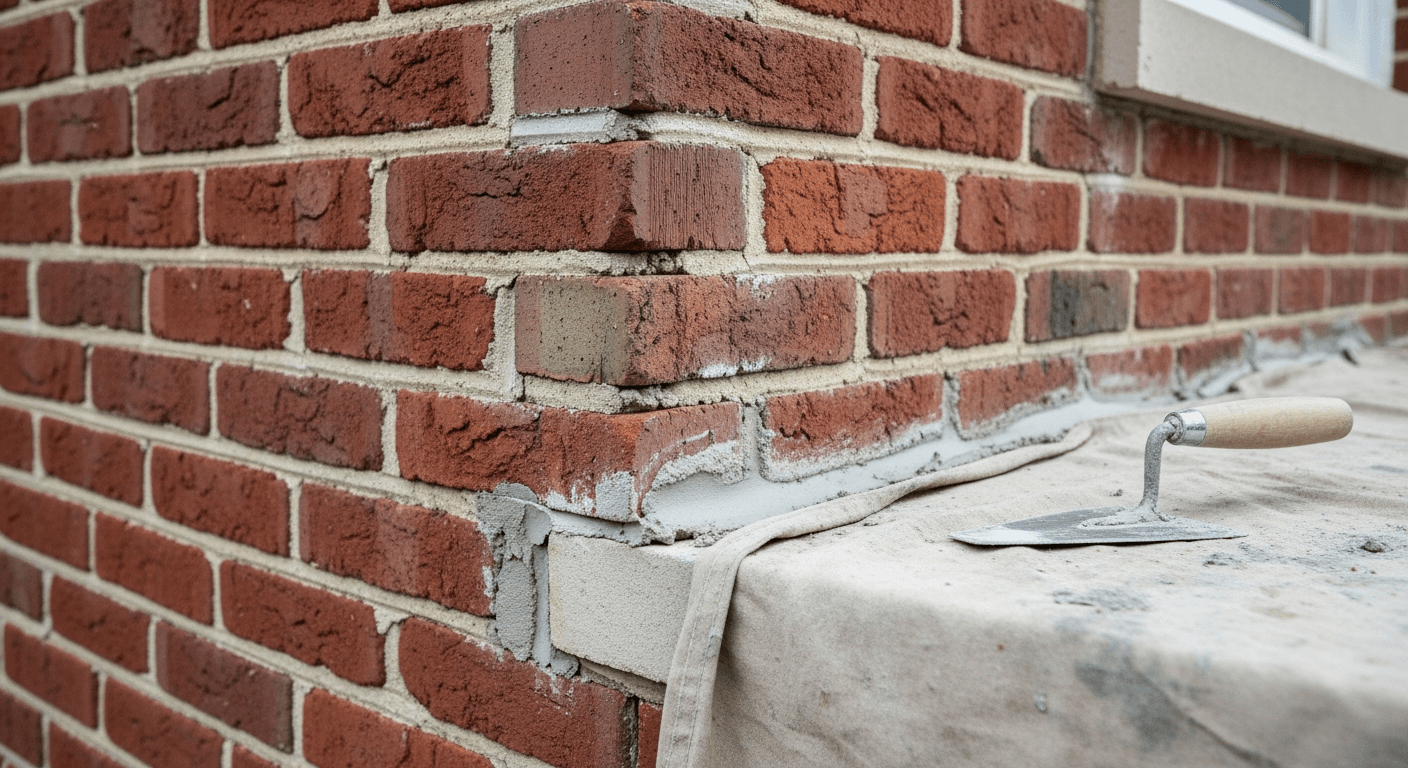
Tuckpointing, also called repointing, is the process of removing deteriorated mortar from brick joints and replacing it with fresh mortar. It is needed when the existing mortar shows cracking, crumbling, or gaps that allow water to enter the wall. Brick is virtually permanent. Mortar is not. On older NJ brick homes, particularly in northern counties where Victorian and colonial brick construction is common, repointing every 25 to 50 years is normal maintenance. Failing to repoint leads to water infiltration that damages the brick itself and eventually the structure behind it.
How long does a concrete driveway last in NJ winters?
A properly installed concrete driveway in NJ should last 30 to 40 years with minimal maintenance. Most premature failures are caused by inadequate base preparation, insufficient thickness, or deicing salt damage. Chloride-based deicers attack concrete and should not be used on concrete driveways. Sand and sand-gravel mixes are safer. NJ freeze-thaw cycles are hard on concrete, but properly cured concrete with a good base handles them for decades. Ridgeline uses proper mix design and base preparation on every driveway pour.
What is the difference between asphalt and concrete for driveways in NJ?
Asphalt costs less upfront than concrete, typically $4,500 to $14,000 for an average NJ driveway versus $7,000 to $20,000 for concrete. Asphalt requires sealing every three to five years to maintain its surface. Concrete does not need sealing but can be damaged by deicers. In NJ winters, asphalt is more flexible and handles freeze-thaw cycles slightly better than concrete. Concrete lasts longer, typically 30 to 40 years versus 20 to 30 for asphalt. The right choice depends on budget, maintenance preference, and the look of the home.
How much does masonry work cost in New Jersey?
Masonry costs in NJ vary significantly by type. Concrete stoop replacement runs $2,500 to $7,500 depending on size and design. Asphalt driveways run $4,500 to $14,000. Concrete driveways run $7,000 to $20,000. Brick repointing on the full front face of an average NJ home runs $3,500 to $9,000. Retaining wall construction runs $50 to $150 per linear foot depending on height and material. Bluestone installation for walkways or steps runs $25 to $50 per square foot. Ridgeline provides fixed-price estimates for all masonry work.
Can you match original brick or mortar on older NJ homes?
Yes, with some caveats. Brick manufactured today is often a close but not exact match to older brick, because clay compositions and firing methods have changed. For repointing, we match the mortar color and texture to the existing mortar. Using the wrong mortar spec on older brick is a common mistake, because Portland cement mortar is too hard for older soft brick and causes it to crack. Ridgeline uses mortar that is appropriately soft for the age and type of brick on older NJ structures.
How do NJ freeze-thaw cycles affect masonry?
Water expands about 9 percent when it freezes. When that water is inside masonry joints, cracks, or porous brick, each freeze cycle widens the opening. Over many cycles, what starts as a hairline crack becomes a structural problem. The fix is sealing water out before it penetrates. Proper mortar joints, crack sealing, and for some applications a penetrating water repellent applied to the surface are the tools. In NJ, where freeze-thaw cycles can number 30 to 60 per winter in northern counties, keeping masonry well-pointed is the most important maintenance a homeowner can do.
Do you handle foundation crack repair in NJ?
Yes. Ridgeline handles concrete block and poured concrete foundation crack repair for NJ homes. Hairline cracks in poured concrete foundations are often cosmetic and can be addressed with polyurethane or epoxy injection. Horizontal cracks in block foundations are more serious and typically indicate soil pressure, requiring structural assessment before repair. Stair-step cracks in block foundations indicate settlement or soil movement. Ridgeline inspects foundation cracks before recommending a repair approach, because the right repair depends on the crack type, cause, and location.